Why DFW Pool Decks Get Too Hot to Walk On — and Which Coatings Stay Cooler
Pool decks get hot because dark, dense surfaces absorb sunlight and hold the heat. The fix is a light-colored, UV-stable coating with a textured finish. Light flake blends reflect more sun than dark ones, and a textured topcoat stays more comfortable and less slippery than a smooth, glossy one.
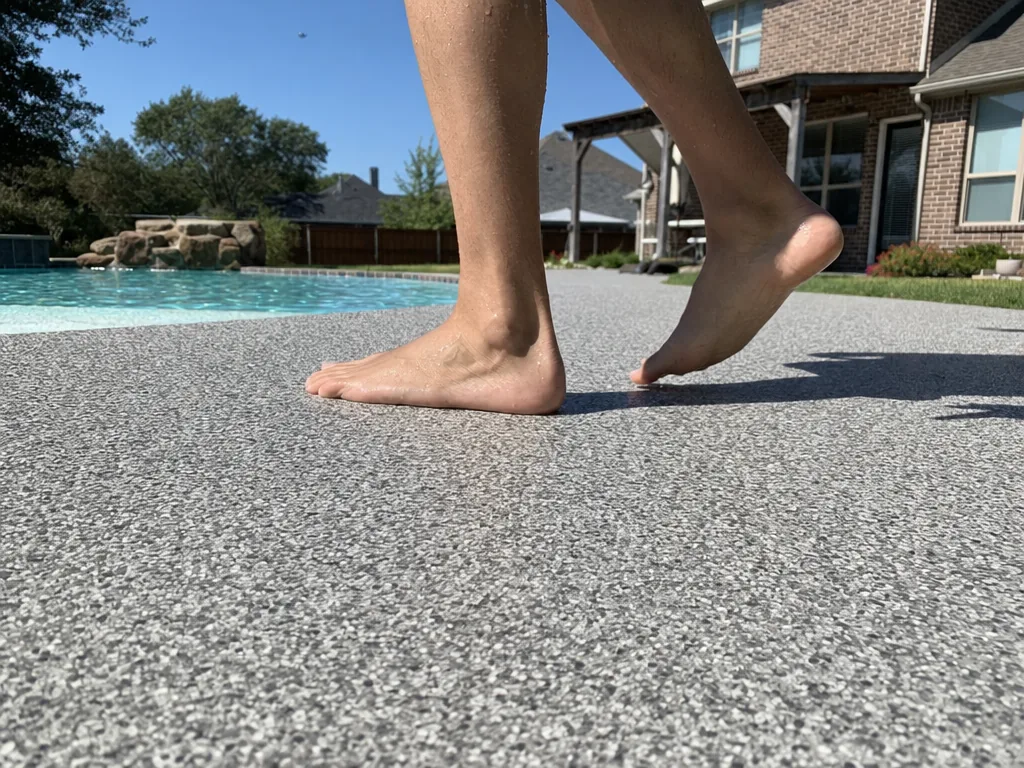
Why Your Pool Deck Burns in July
Concrete is dense, so it soaks up heat all day and releases it slowly. In a DFW summer, with long stretches of full sun and afternoon highs near or above 100°F, an uncoated or dark-coated deck can get hot enough that kids hop across it.
Three things decide how hot a deck gets: color (dark absorbs, light reflects), surface texture (smooth, glossy surfaces feel hotter under bare feet), and shade. You can’t change the sun, but you can change the first two.
What Actually Keeps a Deck Cooler
1. Choose a light color
This is the single biggest lever. Light grays, tans, and sandstone flake blends reflect far more sunlight than charcoal or black. If your pool gets full afternoon sun, stay in the lighter half of the color chart.
2. Pick a textured, satin finish
A textured topcoat with anti-slip grit feels more comfortable underfoot than a high-gloss finish, and it’s safer when wet. Gloss looks great in a garage; on a pool deck, texture wins.
3. Insist on a UV-stable topcoat
Standard epoxy isn’t built for direct sun — it can yellow and chalk over time. Outdoor systems should use a UV-stable polyaspartic topcoat so the light color you chose stays light.
See what a light-colored deck costs for your space.
What Doesn’t Work
- Dark “modern” colors in full sun. They look sharp in photos and get hot in person.
- Garage-grade epoxy outdoors. Without a UV-stable topcoat, it fades and yellows.
- Paint. Concrete paint peels quickly around pool chemicals and standing water.
Bring a color sample outside and set it in the sun for an hour before you commit. The difference between a light and a mid-tone blend is obvious when you touch it.
Next steps: see our pool deck coating system or compare costs in our pool deck cost guide.
FAQ — Hot Pool Decks
Hot Pool Deck FAQ — DFW
Ready for a Pool Deck You Can Walk On Barefoot?
Get a real price range for a light, textured, UV-stable deck coating in 60 seconds — plus 10% off when you submit.
4162 Peace Dr, Frisco, TX 75034
(469) 850-0660 — Call Center 24/7
Installs: Mon–Sat, 7:00am – 7:00pm
Resources
Residential
Commercial
Industrial