Epoxy vs. Polyaspartic Garage Floors in Dallas–Fort Worth: Cost, Winter Installation, UV Resistance & Real Project Examples
Polyaspartic cures faster, resists UV better, and installs in more weather conditions — epoxy is the stronger, thicker base coat and costs less upfront. Most DFW garage floors use both together: an epoxy base coat sealed with a polyaspartic topcoat, which is why the ceiling for a great garage floor isn’t choosing one over the other — it’s how they’re combined. Below, we break down cost, cure time, winter installation, and UV resistance side by side, with a real DFW project example.
Epoxy vs. Polyaspartic: Side-by-Side Comparison
| Factor | Epoxy | Polyaspartic |
|---|---|---|
| Cost per sq ft | $4.50–$6.50 | $6.50–$10 |
| Cure time (walk-on) | 24 hours | 2–4 hours |
| Cure time (park-on) | 72 hours | 24 hours |
| UV stability | Can yellow over time | Won’t yellow |
| Winter installation | Narrower temp window | Cures in colder temps |
| Flexibility | Rigid | More flexible |
| Best used as | Base coat | Topcoat / fast-cure system |
Most DFW garage floors we install use both: a 100% solids epoxy base for strength, sealed with a polyaspartic topcoat for UV stability and fast cure.
Curious what your specific garage would cost?
What’s the Actual Difference?
Epoxy is a two-part resin that cures into a hard, thick, chemical-resistant base coat. It’s the workhorse layer of almost every garage floor coating system — strong, relatively affordable, and available in dozens of colors and chip-flake blends. Its weak points are cure time (a full 72 hours before you can park on it) and UV sensitivity, which is why it’s rarely left as the only layer.
Polyaspartic is a faster, more advanced coating technology, usually applied as a topcoat over epoxy — see our full polyaspartic garage floor coating breakdown for the technical details. It cures in hours instead of days, stays flexible through Texas temperature swings instead of cracking, and won’t yellow under UV exposure the way an unsealed epoxy topcoat can. The tradeoff is cost — polyaspartic runs higher per square foot than epoxy alone.
A homeowner in Frisco needed a 2-car garage (about 450 sq ft) ready for a weekend event with only two days’ notice. We installed a chip-flake epoxy base with a fast-cure polyaspartic topcoat — the garage was walkable in under 4 hours and fully cured for parking the next day. A standard epoxy-only system would have needed 72 hours, which wouldn’t have made the deadline.
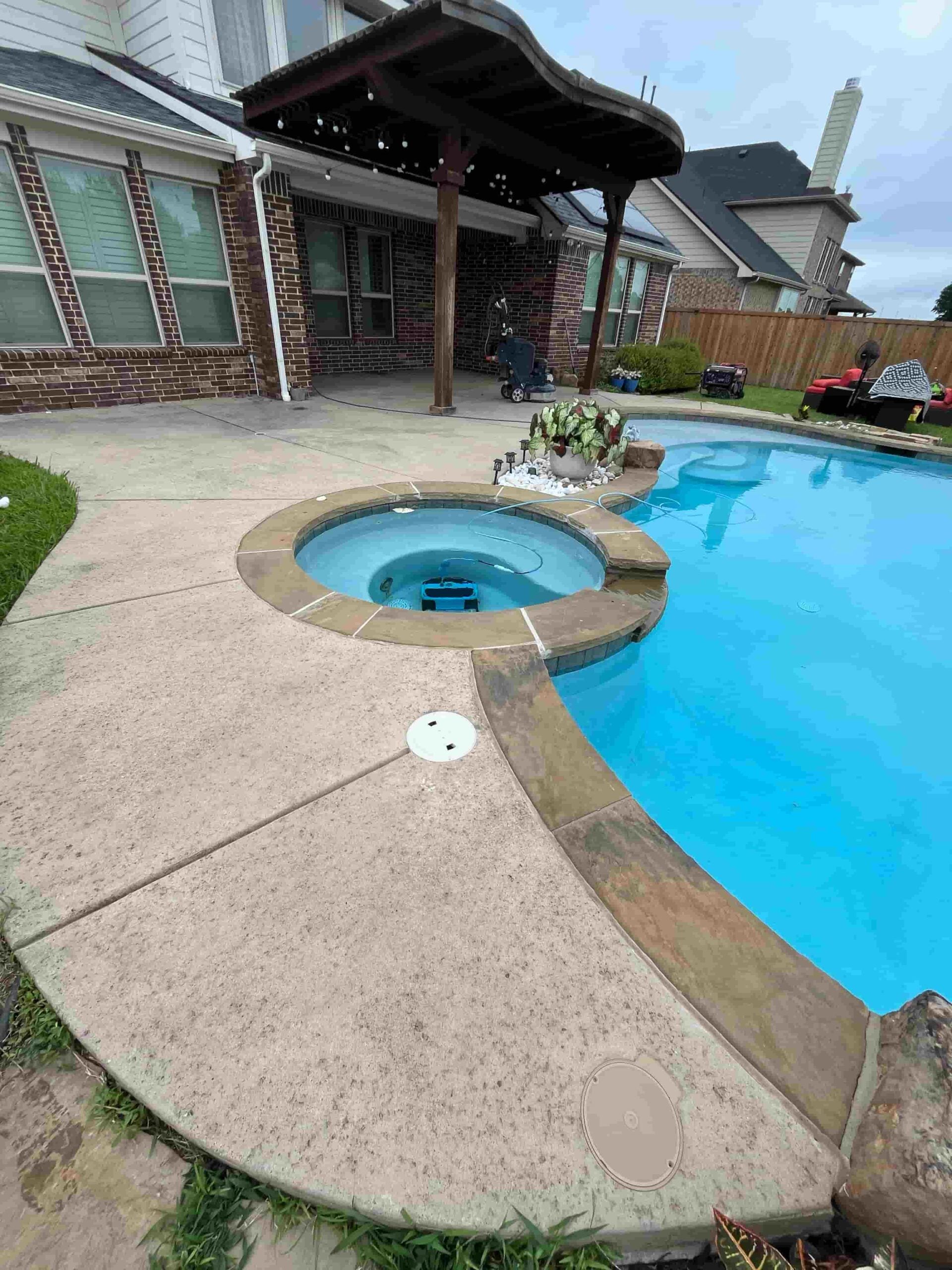
Want a floor like this one? See real 5-star DFW installs.
Does Winter Installation Change the Choice?
Yes, more than most homeowners expect. Standard epoxy has a narrower temperature and humidity window for proper curing — installs scheduled during a DFW cold snap can take longer to cure or risk a weaker bond if conditions aren’t managed correctly. Polyaspartic systems are formulated to cure reliably across a wider temperature range, including cooler winter conditions, which is why we lean on polyaspartic topcoats more heavily for late-fall and winter installs.
Concrete Prep Matters More Than the Coating
Neither epoxy nor polyaspartic will outperform the other if the slab underneath isn’t prepped correctly. Every LNM Epoxy install starts with diamond-grind prep — mechanical profiling that opens the concrete’s pores for a real chemical bond — plus moisture testing and crack repair. Skipping this step is the number one reason garage floors peel or bubble within a year or two, regardless of which coating system was used.
What Affects Your Price
- Square footage — larger floors unlock a lower per-sq-ft rate.
- System combination — epoxy-only costs less than epoxy + polyaspartic topcoat.
- Slab condition — cracks, stains, and old coatings add prep time.
- Finish — solid color costs less than chip-flake or metallic.
Run your specifics through our cost calculator for an instant range, or request a free on-site assessment for an exact, written quote.
So Which Should You Choose?
If budget is the top priority and you’re not in a rush, a quality epoxy system with a standard topcoat is a solid, long-lasting choice. If you need the garage back fast, want maximum UV stability, or you’re installing in cooler weather, a polyaspartic topcoat over an epoxy base is worth the extra cost. For most DFW homeowners, we recommend the combination system — it’s what we install on the majority of garage floors for exactly this reason.
FAQ — Epoxy vs. Polyaspartic
Common Questions About Epoxy & Polyaspartic Floors
Get Your Exact Garage Floor Price
Answer a few questions about your space and get a real price range in 60 seconds — plus 10% off when you submit.
4162 Peace Dr, Frisco, TX 75034
(469) 850-0660 — Call Center 24/7
Installs: Mon–Sat, 7:00am – 7:00pm
Resources
Residential
Commercial
Industrial