Are Epoxy Garage Floors Slippery When Wet?
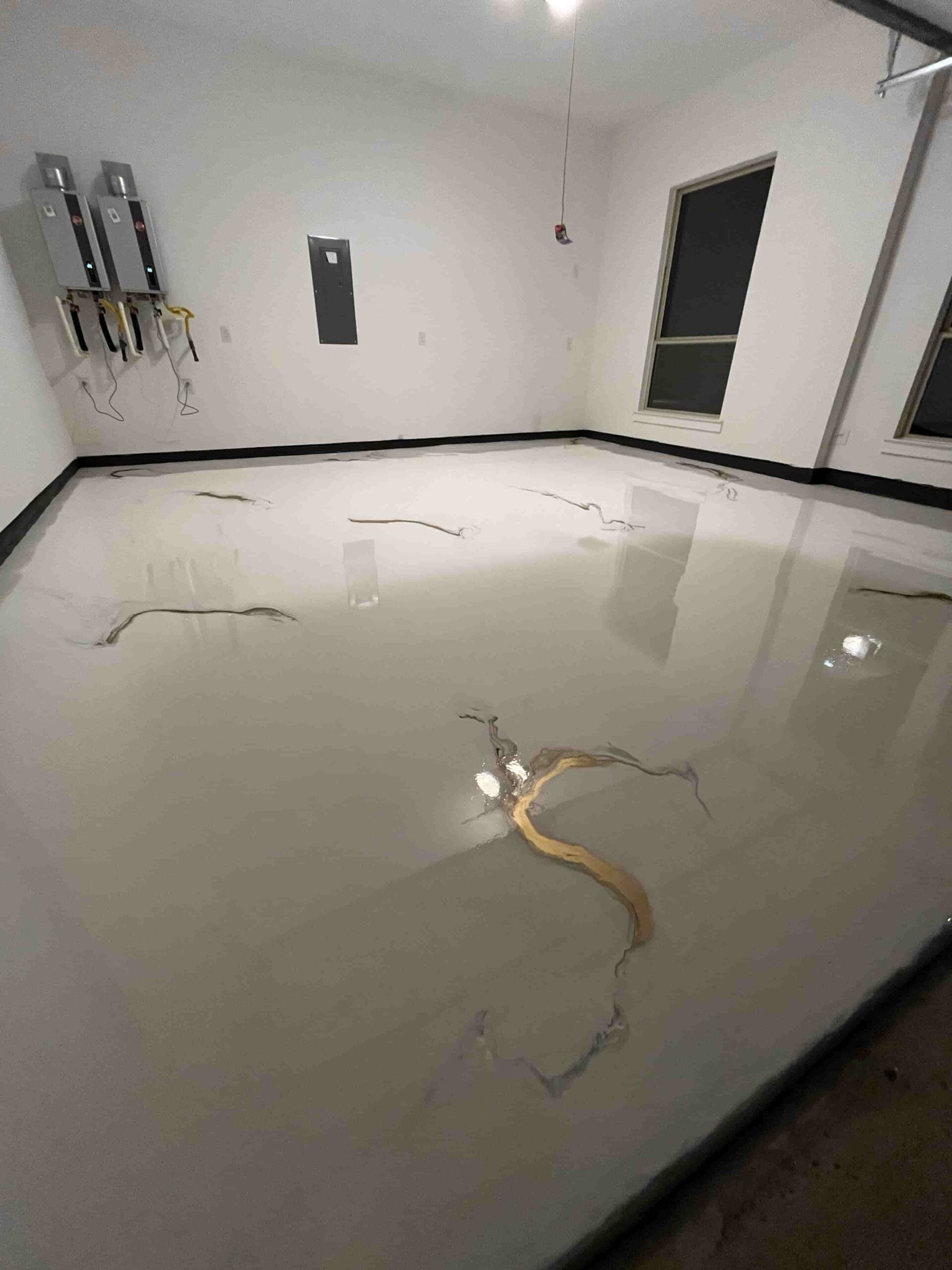
Smooth, glossy epoxy can be slippery when wet, especially in areas exposed to rain, pool splash, or hose-down cleaning. The fix is an anti-slip additive mixed into the topcoat or a textured chip-flake finish — both add real traction without changing the look much. This matters most for pool decks and patios, less for enclosed garages.
When Slipperiness Actually Matters
A fully enclosed garage that rarely gets wet is low-risk. The real concern is pool decks, patios, and garages in flood-prone or car-wash-heavy households where the floor is frequently wet.
Standard glossy epoxy without any anti-slip treatment does become noticeably more slippery when water sits on the surface, similar to any smooth painted surface.
Ask about anti-slip finishes for your space.
Slip Resistance by Finish
| Finish | Wet Slip Resistance |
|---|---|
| Smooth Gloss Epoxy | Low |
| Chip-Flake Epoxy | Good |
| Anti-Slip Additive Topcoat | Excellent |
A Frisco family with a pool deck project specifically requested a textured finish after slipping on their old smooth concrete. We used a chip-flake system with an added anti-slip aggregate in the topcoat — giving real grip even when wet from pool splash.
How Anti-Slip Additives Work
A fine aggregate (often aluminum oxide or polymer grit) is broadcast into the final topcoat, creating microscopic texture you can feel underfoot but that doesn’t noticeably change the floor’s appearance from a few feet away. It’s a standard add-on for pool decks and patios, and optional for garages.
See real pool deck and patio results from DFW homes.
FAQ — Slip Resistance
Epoxy Floor Slip Resistance FAQ
Ask About Anti-Slip Finishes for Your Space
Tell us about your garage, patio, or pool deck and we’ll recommend the right finish.
4162 Peace Dr, Frisco, TX 75034
(469) 850-0660 — Call Center 24/7
Installs: Mon–Sat, 7:00am – 7:00pm
Resources
Residential
Commercial
Industrial