Can You Apply Epoxy Over Old Epoxy?
Sometimes — it depends on the condition of the existing coating. If your current epoxy is intact, well-bonded, and just worn or dull, a fresh topcoat can often go directly over it after proper sanding and cleaning. If it’s peeling, bubbling, or delaminating anywhere, that section (or the whole floor) needs to be ground off first — recoating over a failed bond just fails again.
How We Decide: Recoat vs. Full Removal
A quick adhesion and inspection check during the free on-site visit tells us which category your floor falls into. Well-bonded but dull or lightly worn epoxy is a great candidate for a fresh topcoat — it’s faster and less expensive than a full tear-out.
Any sign of lifting, bubbling, or peeling anywhere on the floor means the original bond has already failed in that area, and recoating over it will only trap the same problem under a new layer.
Get your existing floor assessed.
Recoat vs. Full Removal
| Existing Floor Condition | Recommended Approach |
|---|---|
| Intact, just dull or worn | Sand & recoat |
| Minor scuffs, no lifting | Sand & recoat |
| Peeling or bubbling anywhere | Full removal & reinstall |
A Allen homeowner’s 8-year-old epoxy floor had dulled and lost its shine but showed zero signs of lifting anywhere. We sanded and applied a fresh topcoat — restoring the original gloss at a fraction of the cost of a full redo.
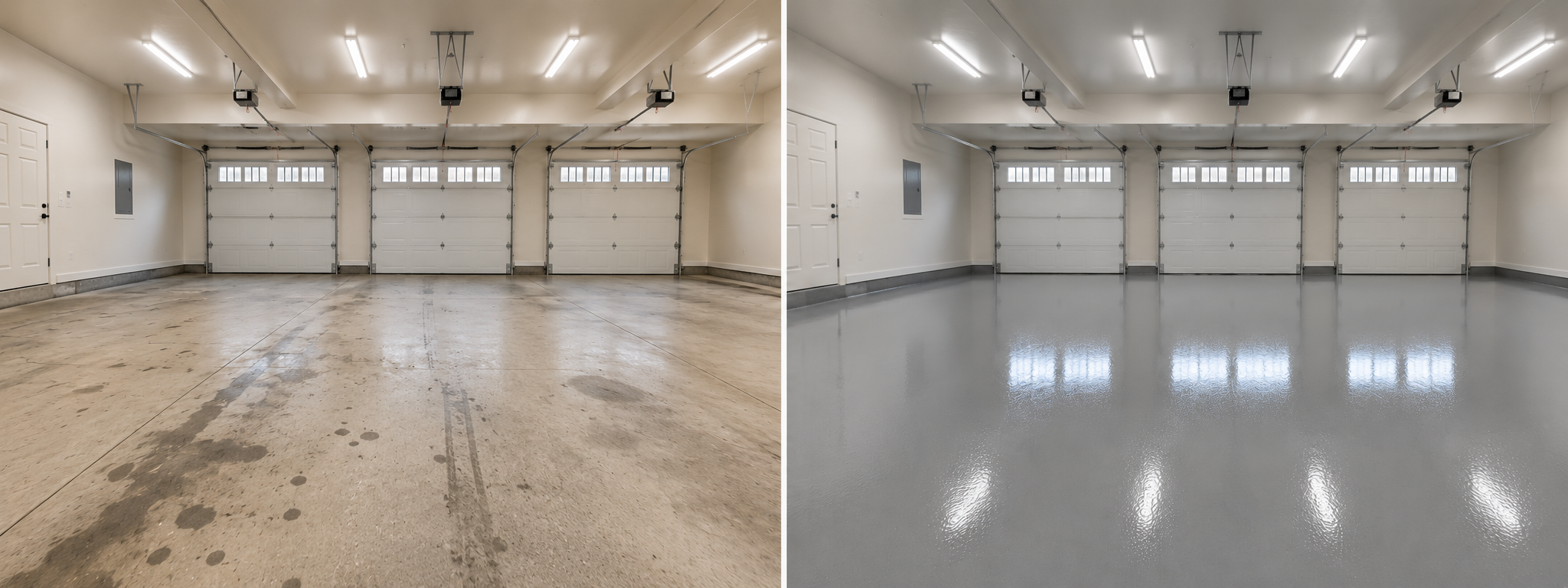
See how recoating compares to full replacement in real projects.
FAQ — Epoxy Over Old Epoxy
Epoxy Over Old Epoxy FAQ
Request a Free Recoating Assessment
We’ll check if your existing floor qualifies for a recoat and give you an honest price.
4162 Peace Dr, Frisco, TX 75034
(469) 850-0660 — Call Center 24/7
Installs: Mon–Sat, 7:00am – 7:00pm
Resources
Residential
Commercial
Industrial