Epoxy vs. Urethane Cement: Which Industrial Flooring System Is Right?
Epoxy is more cost-effective and works well for most industrial floors without extreme temperature or chemical exposure. Urethane cement costs more but handles thermal shock, steam cleaning, and heavy chemical exposure far better — making it the standard choice for food processing, commercial kitchens, and facilities with hot-water washdowns.
Side-by-Side: Epoxy vs. Urethane Cement
| Factor | Epoxy | Urethane Cement |
|---|---|---|
| Thermal Shock Resistance | Moderate | Excellent |
| Chemical Resistance | Good | Excellent |
| Cost per Sq Ft | $6–$10 | $10–$18 |
| Best For | Warehouses, retail | Food/chemical plants |
Get a system recommendation for your facility.
Where Epoxy Is the Right Call
For warehouses, retail spaces, and general office/commercial floors, epoxy delivers excellent durability at a lower cost than urethane cement. It handles forklift traffic, standard cleaning chemicals, and daily wear without issue.
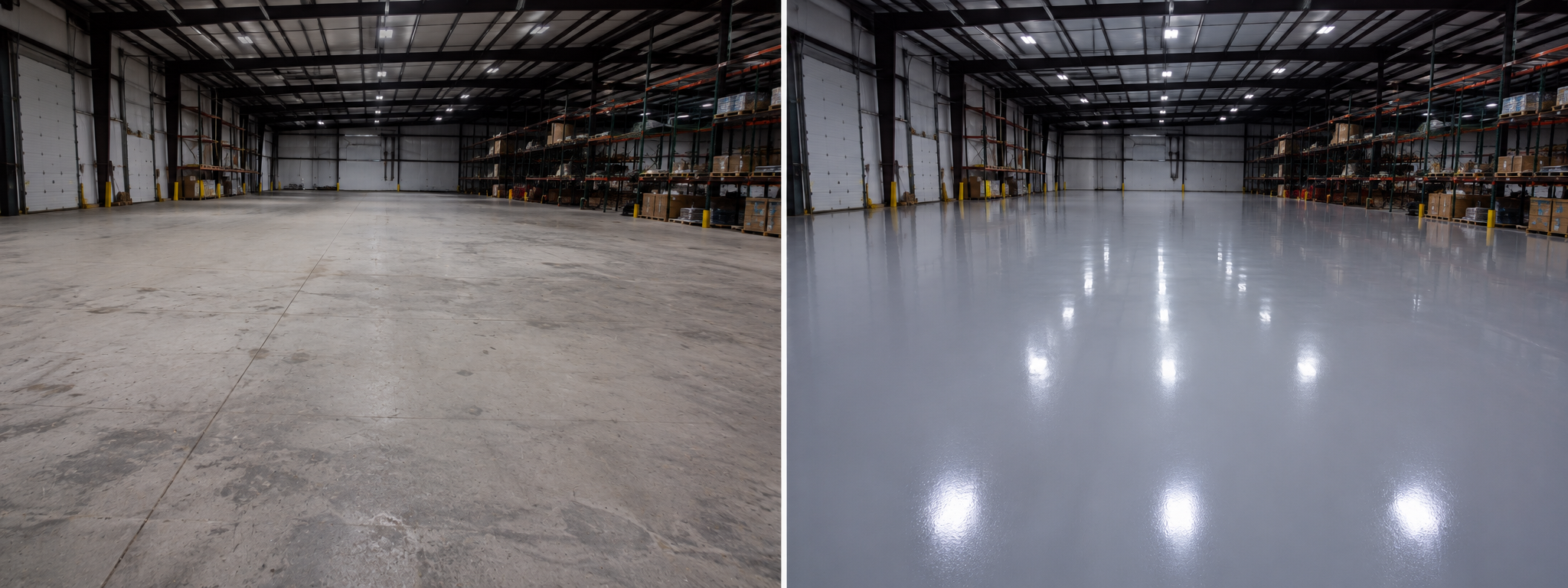
A McKinney food processing facility needed a floor that could handle daily hot-water washdowns and occasional steam cleaning. We installed urethane cement specifically because standard epoxy would degrade under repeated thermal cycling from that process.
Where Urethane Cement Is Worth the Premium
Facilities with commercial kitchens, food/beverage processing, or heavy chemical exposure benefit most from urethane cement’s superior thermal shock and chemical resistance. The higher upfront cost is typically justified by lower long-term maintenance and repair needs in these harsh environments.
See how we’ve handled industrial flooring projects across DFW.
FAQ — Epoxy vs. Urethane Cement
Epoxy vs. Urethane Cement FAQ
Request a Site Assessment for Your Facility
We’ll evaluate your facility’s needs and recommend the right industrial flooring system.
4162 Peace Dr, Frisco, TX 75034
(469) 850-0660 — Call Center 24/7
Installs: Mon–Sat, 7:00am – 7:00pm
Resources
Residential
Commercial
Industrial